Showing posts with label Begonia formosana. Show all posts

Saturday, February 7, 2015

A new hardy begonia?

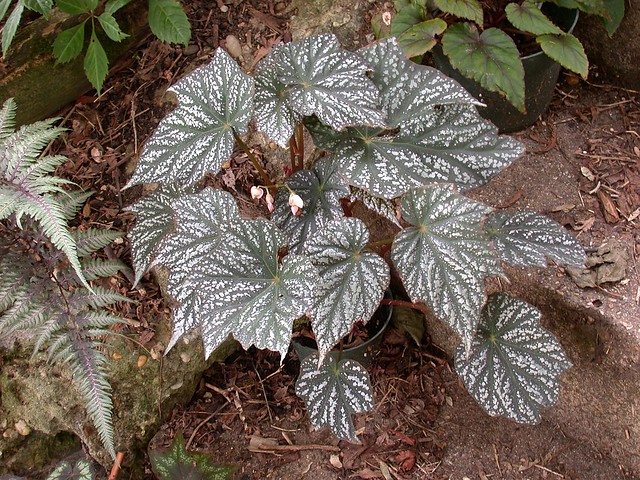
Begonia hybrid
Unnamed begonia hybrid (August 2014)

I'm leading with a photo from last summer because that's what this blog post is ultimately about.  And hoo-boy, could I use some warm weather right now!  This has been a slow winter for me, with MANTS being an isolated bright spot of horticulture in the middle of January (see Beating the winter blahs at MANTS).  This hasn't been a bad winter for Washington, DC but I'm just back from an extended visit to Buffalo to help out with my dad, who is in a nursing home following a major stroke and was in the hospital for the last 6 days of my latest visit.  This was an exhausting visit, and to add insult to injury the weather was awful but for once it worked in my favor: there was a weather advisory on the day of my scheduled departure and I was able to extend my stay for an extra 3 days without any additional fee.

Tuesday, November 11, 2014

Beyond Begonia grandis: new hardy begonias

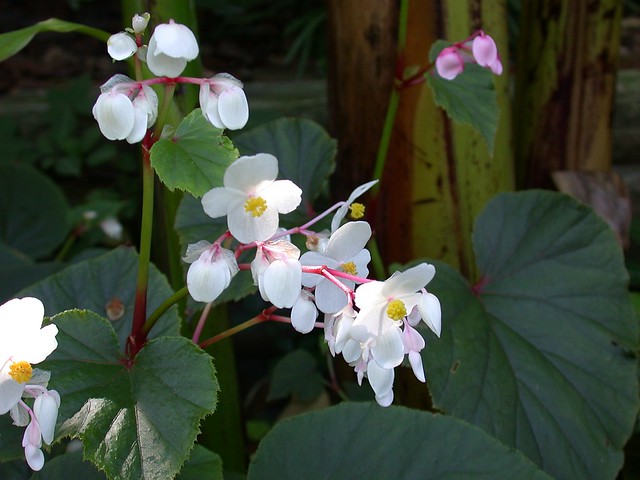
Begonia grandis
Begonia grandis, white-flowered form

Many gardeners are familiar with Begonia grandis (a.k.a. B. discolor, B. evansiana, B. sinensis), a tuberous species from China commonly known as the "hardy begonia".  The name is well-earned: this truly is the hardiest species in a huge but mostly tropical and subtropical genus, going dormant in the winter and able to survive freezing temperatures into zone 6.  But for a very long time, the most exciting news about hardy begonias was that they came in white as well as pink.  In a genus with so many flashy plants, neither the foliage nor the flowers of B. grandis are terribly exciting.  The leaves are handsome enough, and the pink or white flowers are nice coming so late in the season... and darn it, it's a hardy begonia.  But hardiness is mostly what it has going for it, and is offset by the thing being downright weedy.  It produces little aerial bulbils that act like seeds, dropping all over to produce a steadily-growing colony that will eventually crowd out smaller and slower-growing plants.